1, 1, 2, 3, 5, 8….
In the Western world, this famous sequence bears the name of Leonardo of Pisa (Fibonacci), who outlined it in his 1202 book Liber Abaci. Its introduction was accompanied by a famous thought experiment about rabbits breeding at a perfectly predictable rate in a walled garden.
Yet, centuries before Fibonacci wrote about these peculiar rabbits, his sequence was discovered on the Indian subcontinent through a totally different lens. Instead of counting imaginary animals, Indian prosodists used the sequence to describe natural rhythms of human speech and poetry.
Around 1150 CE, the Indian scholar Acharya Hemachandra set out to solve a problem in Sanskrit poetry. Because Sanskrit verse relies on two syllable lengths (short syllables lasting one beat and long syllables lasting two), he wondered: How many distinct rhythmic combinations can you form for a line of poetry that lasts n beats? Hemachandra found that for any valid beat count, the number of valid rhythmic patterns is the sum of patterns from the previous two beat counts.
This is a beautiful way to interpret what may otherwise seem abstract figures! Unfortunately, traditional mathematics education skews far more toward Fibonacci’s style of thinking: relying on contrived scenarios to show practical application, like immortal rabbits in locked gardens or someone buying 80 watermelons at the grocery store. We are routinely told that math matters because it governs money and logistics, but that tends to intimidate far more than it inspires.
Is being reluctantly persuaded into acknowledging the utility of mathematics a substitute for genuine enjoyment? Or does deriving math from art and human expression make the joy of mathematical thinking much more accessible?
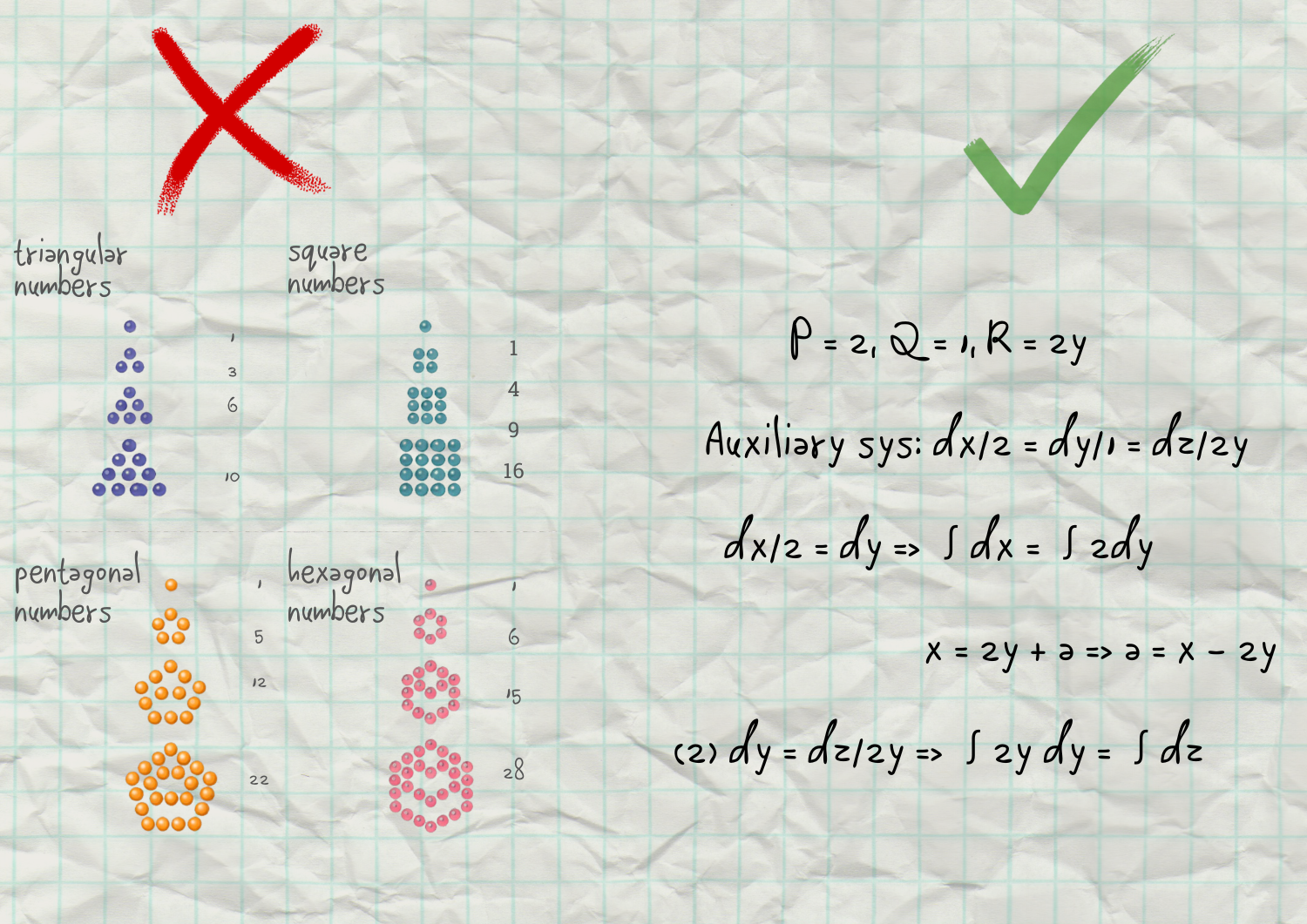
When math is derived from or applied to human creation, students get to stop being passive observers of abstract rules and become active participants in their own education. For instance, math in origami: folding a single sheet of paper without cuts or glue naturally leads to geometric questions that students are excited to solve. Similarly, proving that the sum of the first n odd numbers equals n^2 by manipulating square grids gives learners something tangible to visualize. Mathematical thinking shouldn’t feel like a sit-down chore. We should allow curiosity to take over and make math something people want to play with on their own terms.
It is tempting to argue that we should discard contrived world problems entirely and replace them with artistic exploration. But of course, everyone learns differently. For millions, the beauty of mathematics lies precisely in its power to model the physical world and not in poetry or paper folding. For a student fascinated by physics, ecology, or economics, the desire to optimize and predict is what makes math worth studying. Fibonacci’s rabbit problem, despite its silly premise, opens the door to understanding population dynamics, branching patterns in trees, and the arrangement of pinecone seeds.
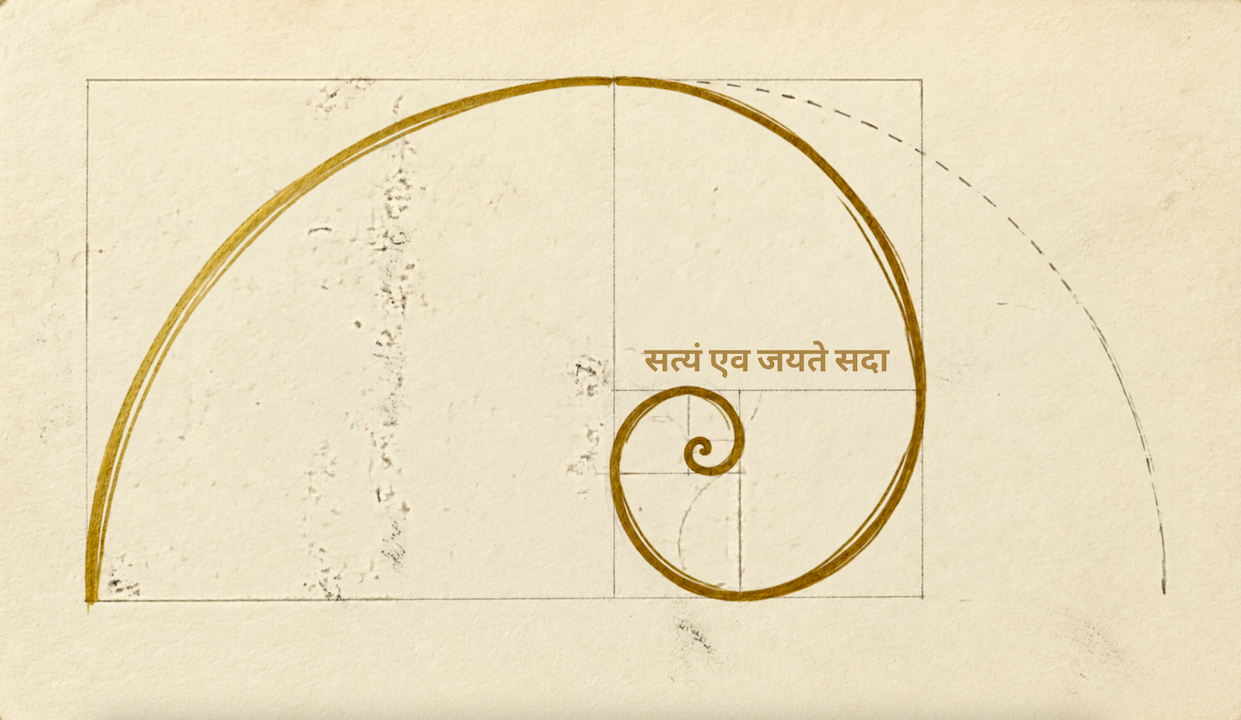
Furthermore, can’t nature itself be considered the purest form of art? The logarithmic spiral of a nautilus shell or the arrangement of seeds in a sunflower gives us an immediate, awe-inspiring connection between numbers and reality. Perhaps seeing math applied to finance, engineering, or other physical structures is empowering rather than intimidating. The problem isn't that we teach utility, but that we often treat utility as the only door into math.
We shouldn't replace application with art entirely. Still, when we acknowledge that the Fibonacci sequence belongs just as much to the structure of Sanskrit verse as it does to biological growth, that math is just as much a natural law as it is a language, we create ways for everyone to love math and make it their own.